 中文
中文Application Advantages of PVDF for Electroplating Tanks, Pickling Tanks, Extraction Tanks and Storage Tanks
- Update time:Jun 23,26 | futegao
- Category:Chemical tanks & storage tanks
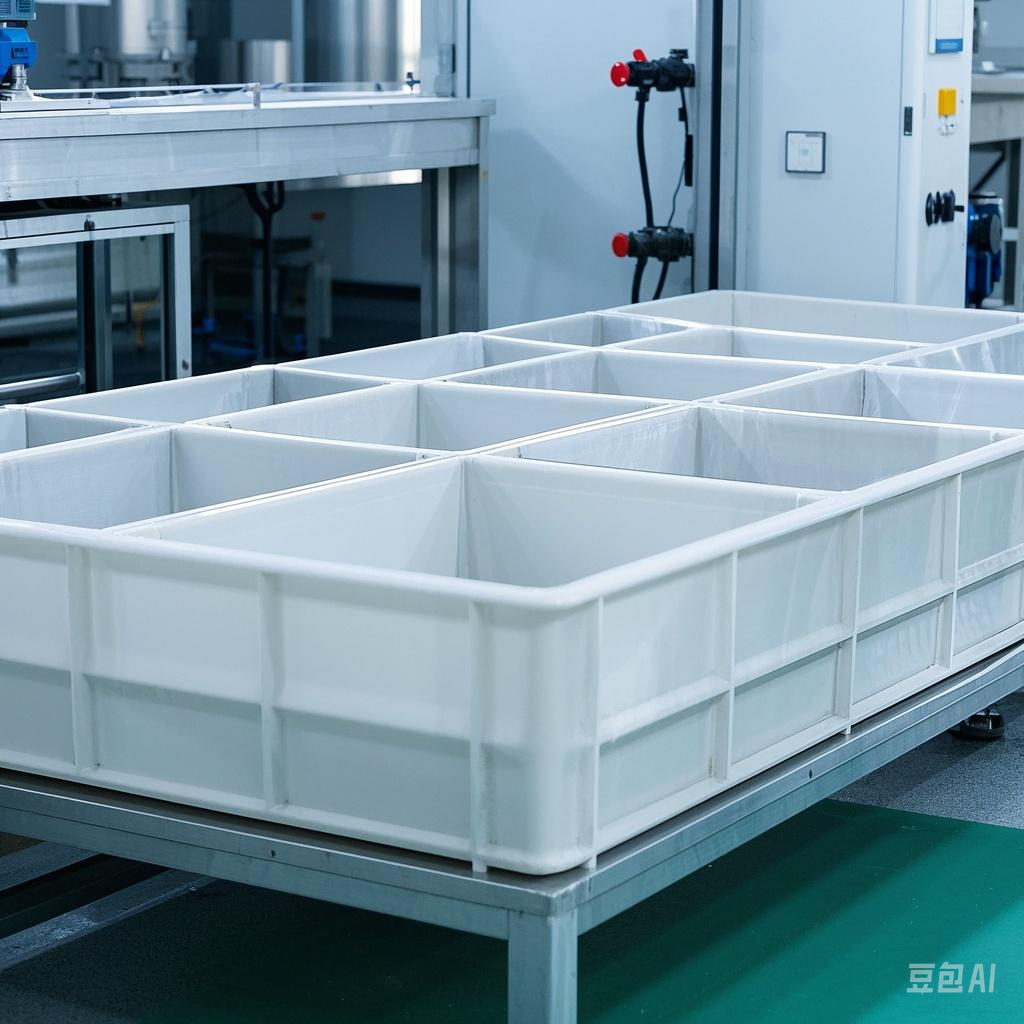
Application Advantages of PVDF (Polyvinylidene Fluoride) Tanks for Electroplating, Pickling & Hydrometallurgical Extraction
With outstanding comprehensive performance, PVDF (Polyvinylidene Fluoride) has become the mainstream premium material for tank bodies under highly corrosive working conditions such as electroplating, pickling and hydrometallurgical extraction. It boasts prominent advantages over traditional materials including stainless steel, PP and FRP, summarized as follows based on practical working requirements:
1. Extreme Resistance to Chemical Corrosion, Compatible with Complex Liquid Systems
This is PVDF’s core advantage for tank applications. The high bond energy of C-F bonds in PVDF molecules endows the material with strong chemical inertness. It can withstand long-term erosion from various strong acids including hydrochloric acid, sulfuric acid, hydrofluoric acid, nitric acid and chromic acid, as well as media such as electroplating solutions, passivation liquids, metallurgical extractants, salt solutions and strong oxidants.In high-concentration mixed acid and chloride-containing corrosive environments, PVDF will not suffer pitting corrosion or perforation like stainless steel. It also outperforms ordinary PP and PVC; it can stably resist strong oxidizing acids without swelling, cracking or pulverization after long-term immersion. It perfectly adapts to multi-type liquid working conditions for pickling, electroplating and solvent extraction, drastically reducing the risk of tank leakage.Note: This material is not suitable for long-term service under high-temperature concentrated strong alkali conditions, yet it can be safely used in conventional electroplating, normal-temperature pickling and extraction systems.
2. Excellent Temperature Resistance for Heating Processes
PVDF features a continuous service temperature range of -40℃ to 130℃. It withstands common heating processes and alternating hot-cold impacts in electroplating and pickling without softening, deformation or creep at high temperatures, and will not become brittle and crack under low temperatures.In contrast, the continuous service temperature of PP tanks is generally below 95℃, prone to deformation and aging under high heat; the service life of ordinary plastic tanks is greatly shortened in heated chemical liquid environments. PVDF tank bodies enable continuous and stable operation for high-temperature pickling, heated electroplating and thermal extraction processes.
3. Robust Mechanical Properties with Stable & Durable Structure
PVDF delivers excellent tensile strength, impact resistance and creep resistance, with a Shore D hardness of 78, balancing toughness and rigidity. Tank bodies can withstand external forces such as liquid agitation, workpiece hoisting and material friction without damage or deformation.Additionally, it has an ultra-low water absorption rate (<0.03%), maintaining excellent dimensional stability under long-term liquid immersion and preventing weld cracking caused by water absorption expansion. Its overall service life exceeds 10 years, far longer than conventional plastic tanks, cutting costs from equipment replacement and production shutdowns.
4. Dense & Smooth Surface, Easy Cleaning, Anti-Scaling & Guaranteed Process Quality
The inner wall of PVDF tanks is smooth and pore-free, making it hard for metal residues, salts and suspended solids in chemical liquids to adhere and form scale. This reduces manual cleaning frequency and lowers operation & maintenance costs.Moreover, the material releases minimal precipitates. Standard grades meet general industrial anti-corrosion requirements, while customized high-purity grades control metal ion content down to PPM/PPB levels. No impurities will leach into electroplating or extraction liquids, avoiding compromised coating quality and extraction purity. It is ideal for precision electroplating and high-end hydrometallurgical production lines with strict cleanliness standards.
5. Convenient Processing with Superior Sealing & Anti-Leakage Performance
PVDF supports hot-melt welding and plate splicing, where welds integrate seamlessly with the base material, delivering far better tightness than FRP fiberglass (which easily suffers interlayer delamination and liquid seepage). It can be fabricated into large integrated tanks, special-shaped tanks and custom equipment with diversion structures.PVDF tanks are lighter than metal alternatives for easier transportation, installation and maintenance. Complex anti-corrosion lining treatment is unnecessary, shortening the overall construction cycle.
6. Flame Retardant & Insulating with High Safety Factor
PVDF reaches UL94 V-0 flame retardant rating, self-extinguishing once away from flame for superior on-site fire safety. It also features excellent electrical insulation, effectively blocking electric leakage risks under live electroplating and electrolysis conditions, making it compatible with all types of electrically equipped electroplating and electrolytic tanks.
7. Lower Comprehensive Operation & Maintenance Costs
Although the upfront procurement cost of PVDF sheets is higher than PP and FRP, its ultra-long service life, minimal maintenance requirements and zero leakage failures deliver lower total lifecycle costs. It is a cost-effective high-performance option for mass-production electroplating plants, pickling workshops and metallurgical extraction lines operating 24/7 under heavy-duty corrosive conditions.